


Yes, SEO is worth it for most small businesses whose customers search Google before they buy, as long as you can wait a few months and a handful of extra jobs a month would cover the cost. It isn’t worth paying for yet if nobody searches for what you sell, you need customers this week, or your website can’t turn visitors into calls. Google itself says that if you run a small local business, you can probably do much of the work yourself.
Below: how to tell which side you’re on, a break-even sum you can run with your own numbers, and five myths that make the decision harder than it needs to be.
When SEO is worth it, and when it isn’t
SEO is usually worth it if:
- people already search for your service in your area (type it into Google and watch the suggestions)
- one new customer is worth hundreds, or customers come back
- you can wait. Google’s SEO starter guide says some changes take effect in a few hours and others take several months, and suggests waiting a few weeks before judging any change
- you have room to take on more work
It’s not worth paying for yet if:
- you sell something so new that nobody knows to search for it
- you need cash this month (ads or direct outreach are faster)
- you’re fully booked and don’t plan to grow
- your site is broken, slow or has no clear way to call you. Fix that first, or extra visitors leak away
The break-even sum: run it with your own numbers
You don’t need an ROI promise from anyone. You need one sum:
Jobs needed per month = monthly SEO cost ÷ (average job value × profit margin)
The numbers below are an example to show the method, not results from a real business.
| Step | Example | Your number |
|---|---|---|
| Monthly SEO cost | $1,000 | The monthly quote or plan price you’re weighing |
| Average job value | $500 | Average of your last few months of invoices |
| Profit margin | 40%, so $200 profit a job | What’s left after materials, labour and fuel |
| Jobs to break even | $1,000 ÷ $200 = 5 a month | SEO cost ÷ your profit per job |
| Enquiries needed | If 1 in 3 enquiries books: 15 a month | Jobs ÷ the share of enquiries that book |
Now sanity-check it. If 15 extra enquiries a month is realistic for your trade and town, SEO is worth testing. If the sum needs 60 new customers a month in a small town, it isn’t, at least not at that price. Repeat customers and referrals make the real value of each job higher, so count them if you have the figures.
How much SEO costs a small business
- Doing it yourself: no fees, only time. Google says it costs nothing to appear in our organic search results.
- UK: IWILLDIGITAL’s 2026 UK price guide puts small-business SEO at £400–£1,500 a month, and local SEO for one location at £300–£1,200. These are a third party’s published ranges, not our quotes.
- US and Canada: our guide to local SEO costs compares DIY, freelancer, agency and audit prices in USD, GBP and CAD.
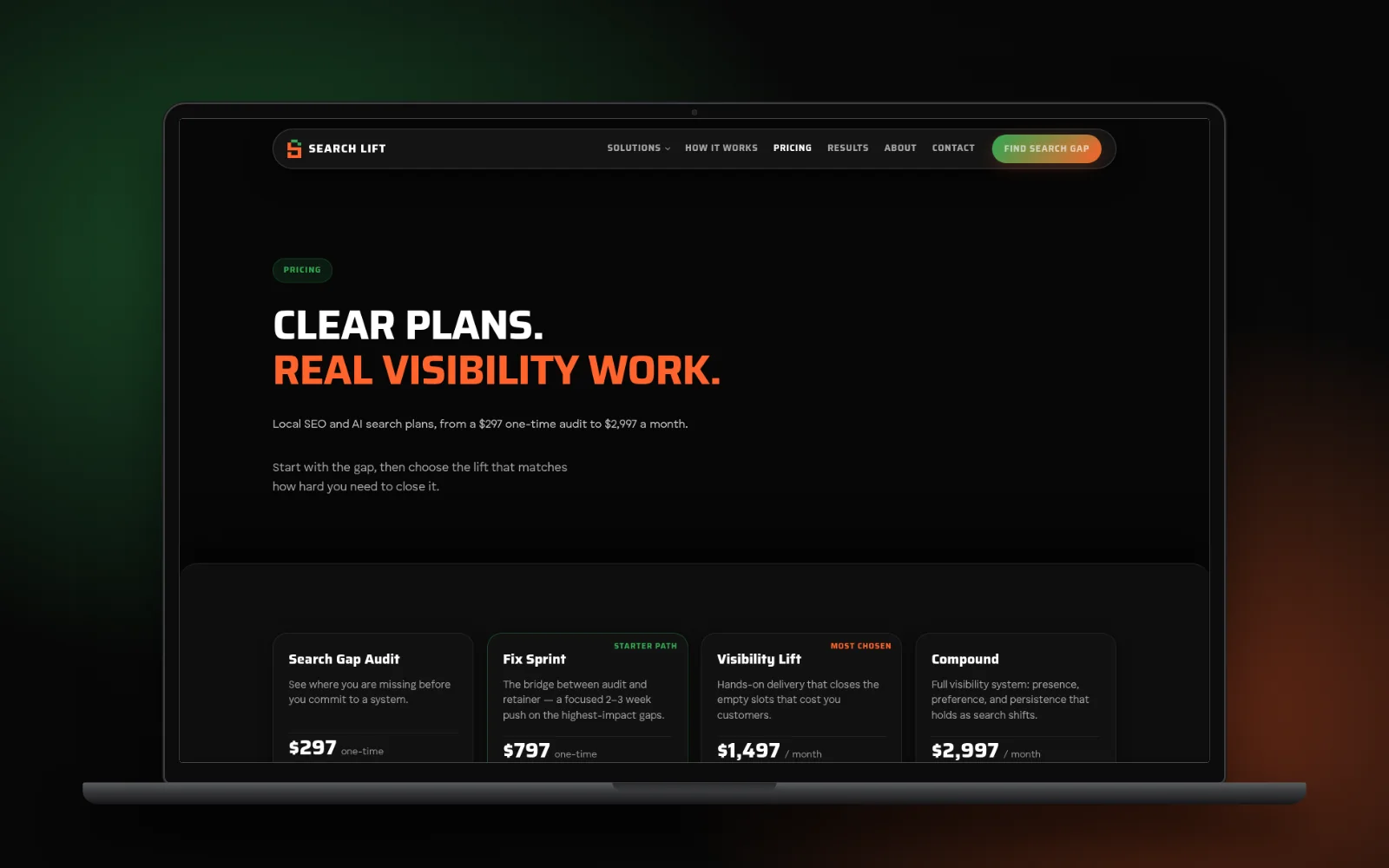
- Search Lift: our plans run from a $297 one-time audit to $2,997 a month.
Whatever the quote, put it into the break-even sum above before you sign.
5 SEO myths that skew the decision
1. “SEO is dead because of AI”
Google’s own guide to optimizing for generative AI features asks whether SEO is still relevant and answers: “In short, yes!” Its AI Overviews and AI Mode are rooted in Google’s core ranking systems, and Google says there are no additional requirements to appear in them. It also says that optimizing for AI search, sometimes sold as “AEO” or “GEO”, is still SEO.
2. “You’ll see results in 30 days”
Some fixes show quickly, but Google says other changes could take several months. Anyone promising page one in a month is guessing. Judge progress in calls and enquiries over a few months, not days. Our guide to how long local SEO takes breaks the wait down stage by stage.
3. “Just pay for ads instead”
Ads are faster, and with cost-per-click bidding you pay for each click. When the budget stops, so do the clicks. Paying Google for ads also won’t have any effect on your organic rankings. Many small businesses use ads for quick wins while SEO builds.
4. “A good agency can guarantee page one”
Google is blunt: “No one can guarantee a #1 ranking on Google.” It also warns against anyone claiming a special relationship with Google. Treat a guarantee as a reason to walk away.
5. “Small businesses can’t beat big brands”
In local results, Google ranks businesses mainly on relevance, distance and prominence. A nearby business with a complete Google Business Profile, real reviews and links from local sites has a real chance against a national chain. If you’re missing from Maps entirely, start with why your business isn’t showing on Google Maps.
How to start without wasting money
- Do the free basics. Complete your Google Business Profile, ask happy customers for reviews and give each main service its own page (see how to write a service page that ranks).
- Set up Search Console. It’s free and shows which searches already bring you up.
- Ask Google’s questions. Before hiring anyone, ask what results they expect, in what timeframe, and how they measure success.
- Measure enquiries, not rankings. Track calls and form leads each month against your break-even number.
To see where you’re missing across Google, Maps and AI answers before you spend anything, run the free Search Gap check. If the sum works and you’d rather not do it yourself, our local SEO service covers the profile, pages and reviews that drive local calls. You can see how the work runs, step by step, and how we measure results.